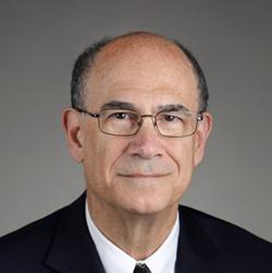
The Institute of Complex Medical Engineering (ICME) mourns the passing of Professor Mark Hallett, a towering figure in clinical neurophysiology and human motor control research, and a deeply valued advisor to our institute from the time of the foundation since 2005. His loss is felt profoundly across the global neuroscience community and by all who had the privilege of working with him.
Professor Hallett’s distinguished career began at Harvard University, where he earned both his A.B. and M.D. degrees. Following his internship at the Peter Bent Brigham Hospital and neurology training at Massachusetts General Hospital, he pursued advanced fellowships in neurophysiology at the National Institutes of Health (NIH) and at the Institute of Psychiatry in London under the mentorship of C. David Marsden. Before joining the NIH in 1984, he served as Chief of the Clinical Neurophysiology Laboratory at Brigham and Women’s Hospital and rose to Associate Professor of Neurology at Harvard Medical School.
At the NIH, Professor Hallett became Chief of the Medical Neurology Branch and led the Human Motor Control Section, where his pioneering work shaped modern understanding of voluntary movement and movement disorders. His research employed a broad array of methods—ranging from TMS and EEG to PET and fMRI—and yielded foundational insights into dystonia, Parkinson’s disease, cerebellar ataxia, tremor, myoclonus, tics, and functional movement disorders. His scholarship profoundly advanced the field’s conceptual and clinical landscape.
Professor Hallett’s leadership extended across many international societies. He was the Inaugural President of the Functional Neurological Disorder Society, Past-President of both the International Federation of Clinical Neurophysiology and the International Parkinson and Movement Disorder Society, and Vice-President of the American Academy of Neurology. He also served as Editor-in-Chief of Clinical Neurophysiology. His many honors—including honorary memberships in the American Neurological Association and the European Academy of Neurology, a Doctor of Medicine Honoris Causa from the University of Hamburg, and the World Federation of Neurology’s Medal for Contributions to Neuroscience—reflect a lifetime of extraordinary impact.
Beyond his scientific achievements, Professor Hallett was a generous mentor, a rigorous thinker, and a steadfast collaborator. As an advisor to ICME, he offered insight, encouragement, and a vision of scientific excellence that will continue to guide our mission.
We extend our deepest condolences to his family, colleagues, and the many students and trainees he inspired. Professor Hallett’s legacy will endure in the countless lives he touched, the scientific foundations he built, and the future discoveries made possible by his work.
He will be deeply missed, and long remembered.
The ICME Committee
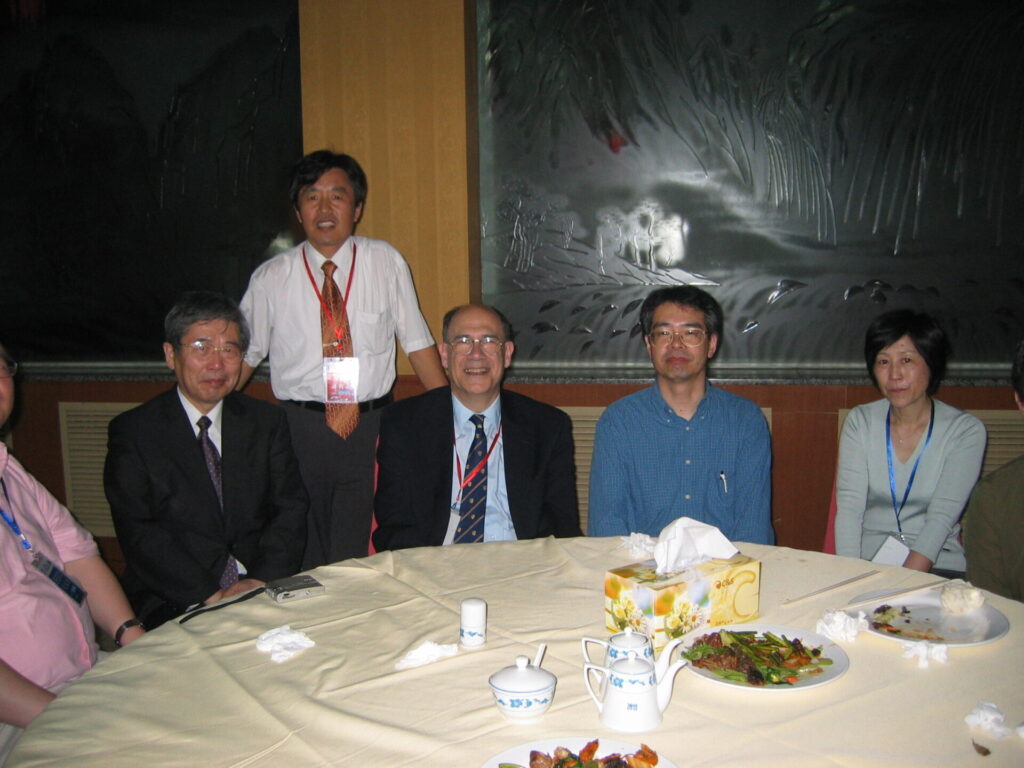
Prof. Hallett at CME 2007
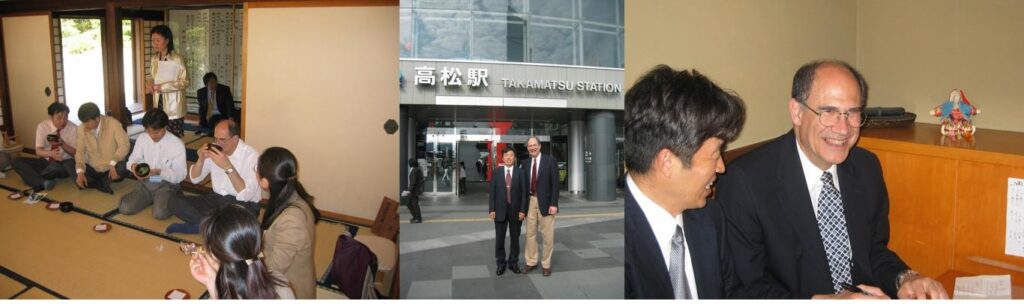
Prof. Hallett at CME 2005